Buying Your First Hunting Farm
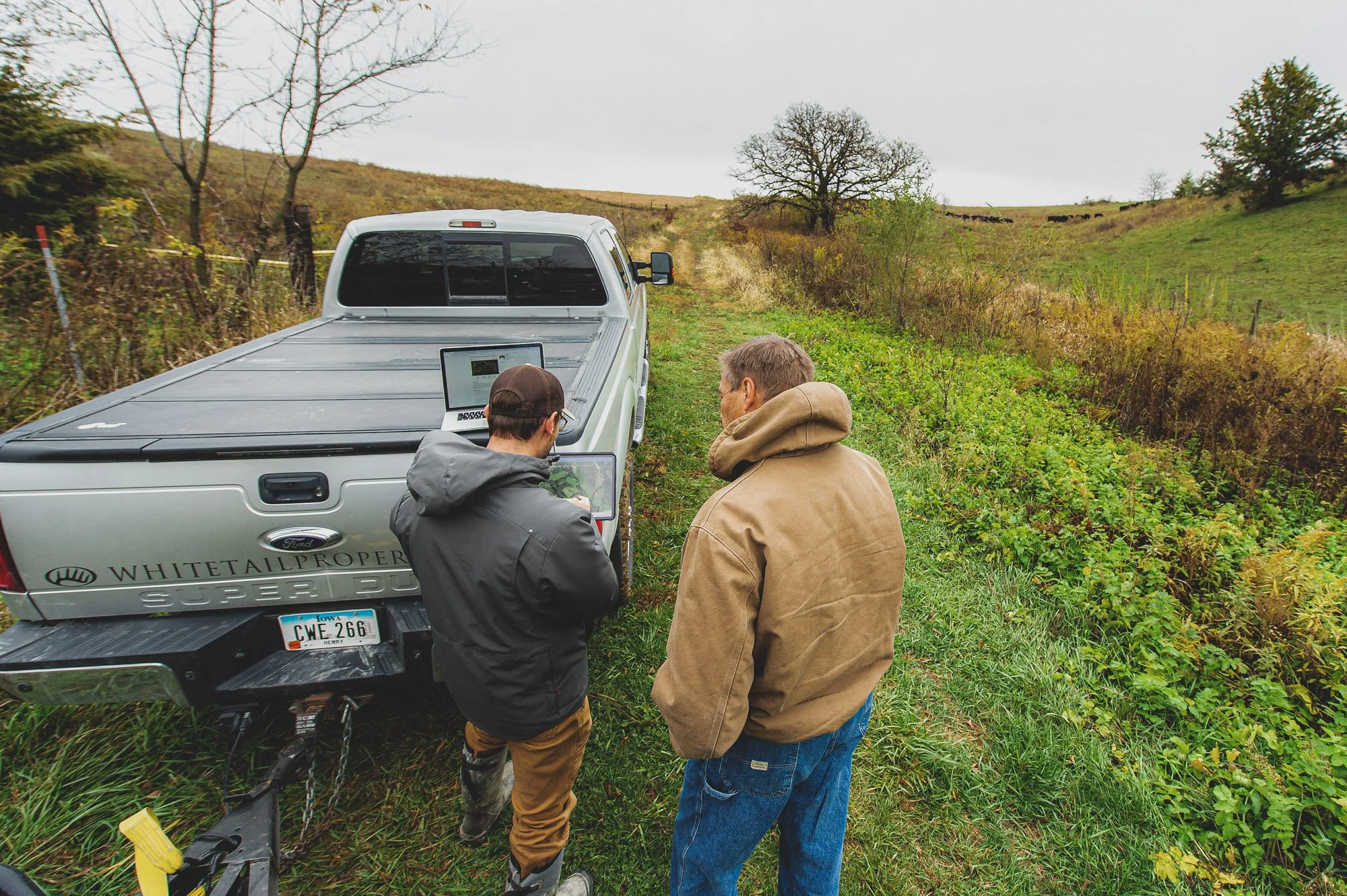
Owning land can be a remarkable experience. History shows that with the right purchase, you can enjoy a lifetime of memories with an asset that may very well become one of—if not the best— investments of your life. However, becoming a landowner requires careful consideration and planning. As an experienced Whitetail Properties Land Specialist and experienced landowner in southeast Iowa, my goal is to arm you with a guide through the process of becoming a landowner.
Dial in a Budget
Figuring out what you can afford is the absolute first step. Many times, I hear buyer’s tell me the size of the farm they want, but what really matters is calculating what you're comfortable spending. Unless you’re paying cash from the bank or self directing an IRA, you’ll need a lender to back you with a loan. Figure having 20-30% of the purchase price in cash as a down payment for closing day, and the bank will loan you the rest at that same time. So for a $500,000 property, you’ll need $40,000 - $60,000 saved up. Before you get too serious about land, it's important to get pre-approved for financing. This will demonstrate to sellers that you are a qualified buyer that can perform on closing day. Work with a lender who specializes in rural and recreational property loans to explore your financing options and secure the best possible terms. If you’re ready to take this step and need some referrals, reach out to me here.
Define Your Goals
Take the time to clearly define your goals and objectives of owning a hunting property. Do you want a banger of a farm and don’t care much about the income it makes? Or do you want primarily an income producing property that still may hunt fairly well? Some buyers specifically need a farm that will give a great late-season experience in addition to bowhunting well. Do you want to be in an area that has whitetail management actively happening, or would you prefer to enhance a property in an unproven area? Would you prefer a property that already has improvements, or would you want to buy a project farm that you can develop into a whitetail hunting canvas? Articulating your goals to an experienced agent will help identify buying opportunities that align with your objectives.
Hone your Search Area
Determine how far you want to travel to visit the property. People have different tolerances for travel time, so make sure you give this some thought. Consider when you’ll use it, how often you want to go there, and if you’ll need to find a place to stay overnight versus a day trip. Land that’s close to a large population will be more expensive per acre than vast rural areas further away. The same goes for well-known areas that have a higher concentration of active deer management–they will cost a higher price per acre. Lastly, give consideration to buying land in an area that has other amenities that you or your family need, like recreational parks, grocery stores, hospitals, and even distance to an airport.
By identifying your search area upfront, you can narrow down your options and save time looking at land that seems great but is ultimately too far away.
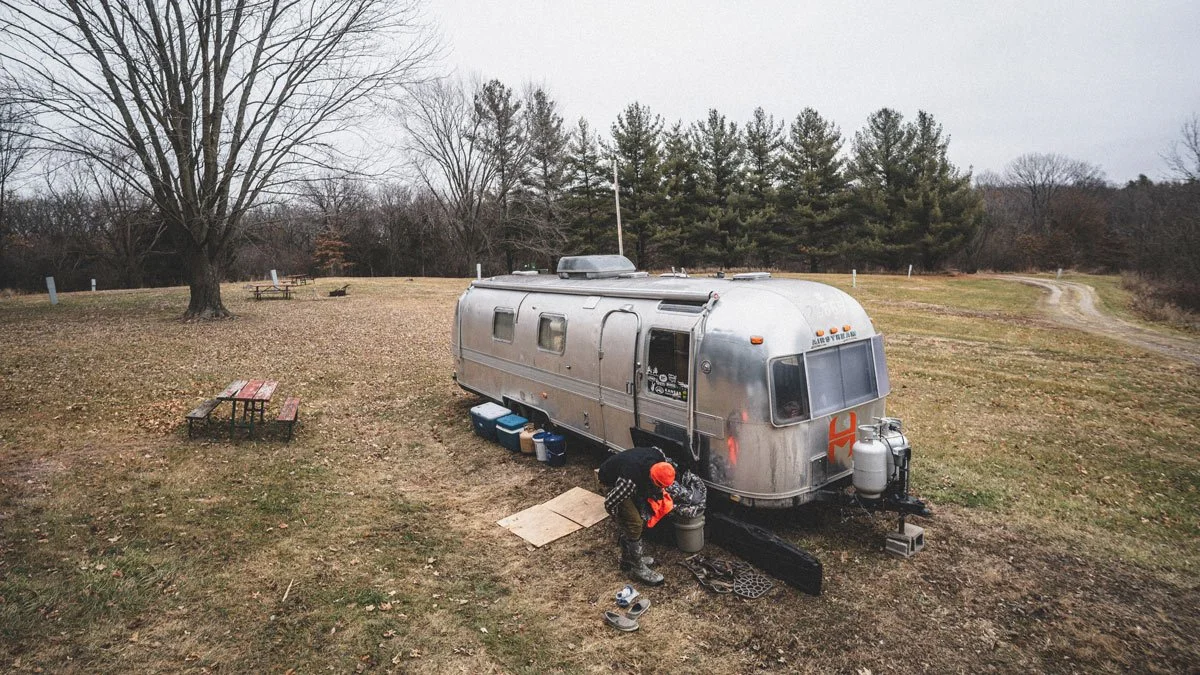
The ole’ Airstream forward deployed as base camp for hunting season.
Get a Land Specialist
Once you have a clear understanding of your financing, goals, and search area; contact a local Land Specialist. Working with a professional is crucial to not only finding properties that align with your interests, but essential in navigating the complexities that come with a large financial transaction. An experienced agent brings clarity to the process—finding properties that never hit the open market, recognizing issues you might miss, and negotiating the purchase with confidence. In recent years, there have been many new brokerages that have germinated from an easy real estate market; where nearly anyone with a pulse could sell you a farm. However, you owe it to yourself and your family to have experienced guidance so that you can have the ultimate ally to protect your interests in what could be the largest purchase of your life. The last thing you want to do is work with a desperately pushy agent, or try to do it without professional representation. To get connected with a professional Land Specialist that’s knowledgeable in your area, complete this form and I’ll point you in the right direction.
Look at Farms
Once your agent Land Specialist presents you a prospect, its time for a showing. Meet with them at the farm and check it out thoroughly. Evaluate the infrastructure like roads, trails, and access points, and consider any updates that may be necessary like hunting blinds, food plots, or storage. Assess the condition of existing buildings and consider the cost and feasibility of making any improvements. A UTV will help make the showing more efficient, but take the time to walk a lot of the property as well. You’ll get a better grasp of the size, see boundaries, access hunting spots, and see whats happening on the other side of the fence. Make sure to dress right with long pants, boots, and a long sleeved shirt to protect you from all the bugs and briars that can distract you when walking around.
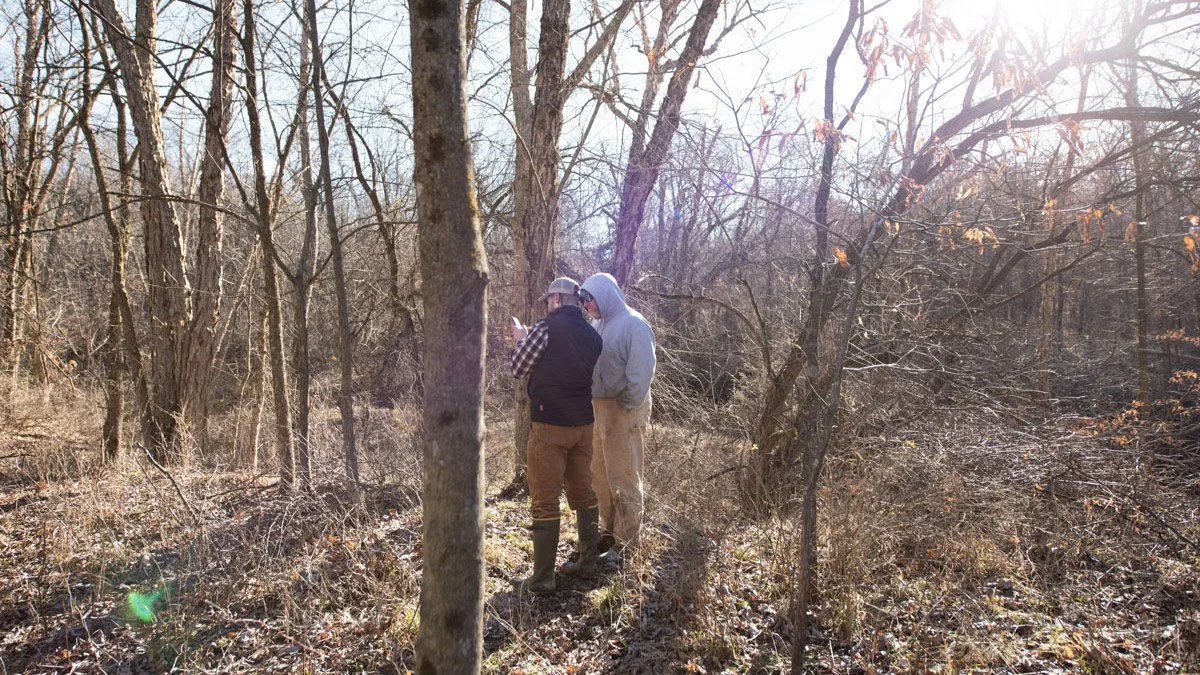
Ben walking a ridge with a prospective buyer—now the proud owner of this southeast Iowa farm.
Make an Offer
Once you've found a hunting property that you want to own, your agent will draft a purchase offer with your terms of the sale. Factors such as the market, the condition of the property, how long its been for sale, and comparable sale prices should guide the offer price. Be prepared to negotiate with the seller to reach a mutually beneficial agreement. Lean on your agent to make an appealing offer based on their past experiences in negotiations. Be prepared to give a little and take a little, although some sellers may not concede much–if at all–on a new listing. Your agent will compose your offer with state approved forms, and ensure that it is comprehensive by addressing all aspects. This includes purchase price, earnest money, whether its contingent on financing or not, how the tenancy terms will be handled with a farmer that could be renting the farm acres, any extra contingencies, and the closing date.
Close the Deal
Finally, once your offer is accepted, its time to submit the earnest money and work toward all contingencies. Notify your lender and get them moving on scheduling an appraisal if needed. In Iowa, properties are sold with abstracts—a document of the history of ownership—so you’ll need an attorney to represent you as a buyer and review the title. They’ll provide a title opinion that will go to the seller’s attorney, and the final transfer documents will be prepared. Work with your agent and attorney to review and sign all necessary paperwork and complete the closing process. Many times, a closing can happen remotely if the real estate company and closing agent prepares ahead of time. We’ve closed dozens of sales over the last couple of years by having the seller sign the transfer documents ahead of time while the buyer/lender executes the loan documents. My Southeast Iowa Land Team has deep experience in coordinating complicated closing processes so that our clients are updated throughout the process, and have a headache-free experience.
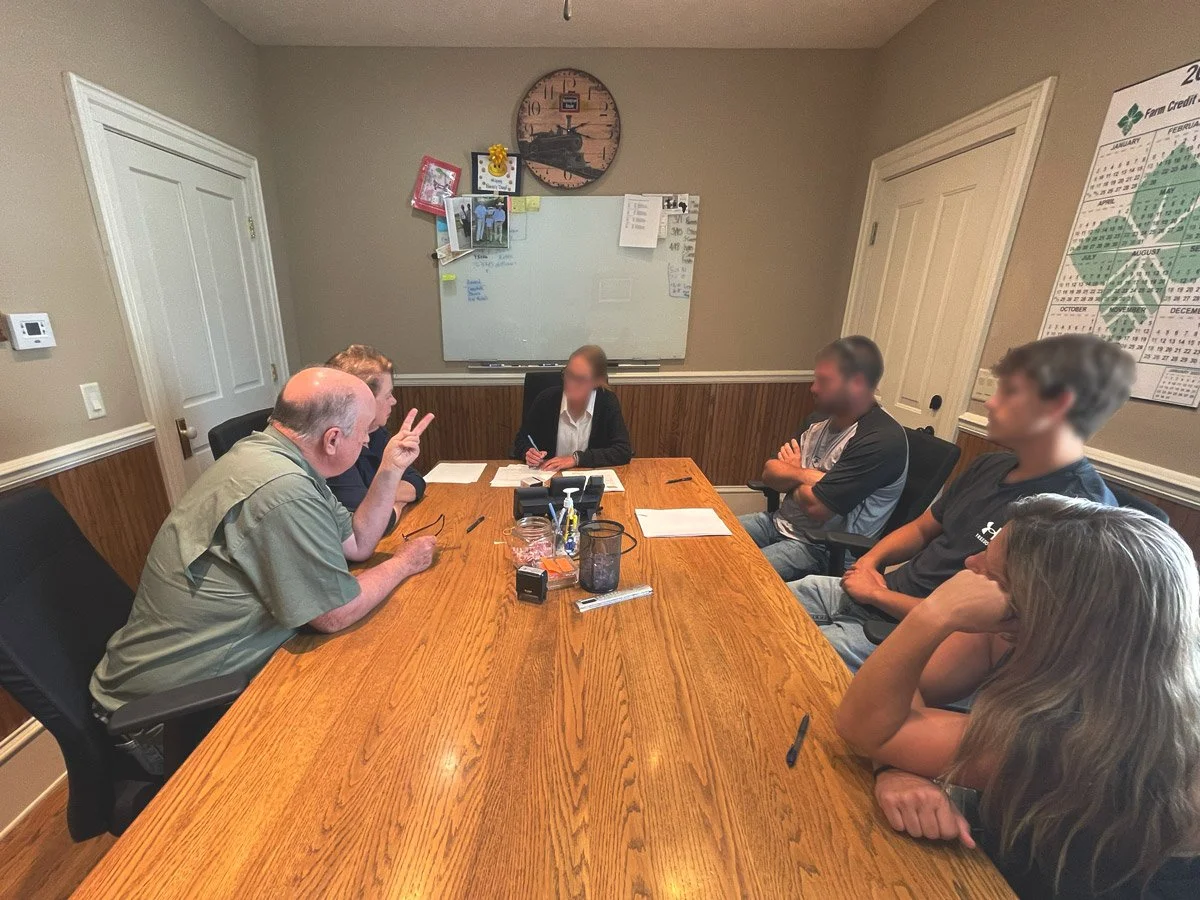
My clients during the closing of a phenomenal 381 acre deer hunting farm in southern Iowa.
In Conclusion
Buying a hunting farm is a significant investment that requires careful planning, research, and consideration. By following this blueprint and working with an experienced Land Specialist, you can navigate the buying process with confidence and find the perfect hunting farm to enjoy for years to come.
If you’re looking to buy or sell land, consider talking to one of our Land Specialists at Whitetail Properties. I think that we’re the best in the business—built on a selective hiring process and a headquarters staff that helps us sell strong for our clients every single day.